The Radio Act of 1927 and the Commission It Made Necessary
Spectrum chaos in the mid-1920s produced the first federal body with power to decide who could broadcast — and on what terms.
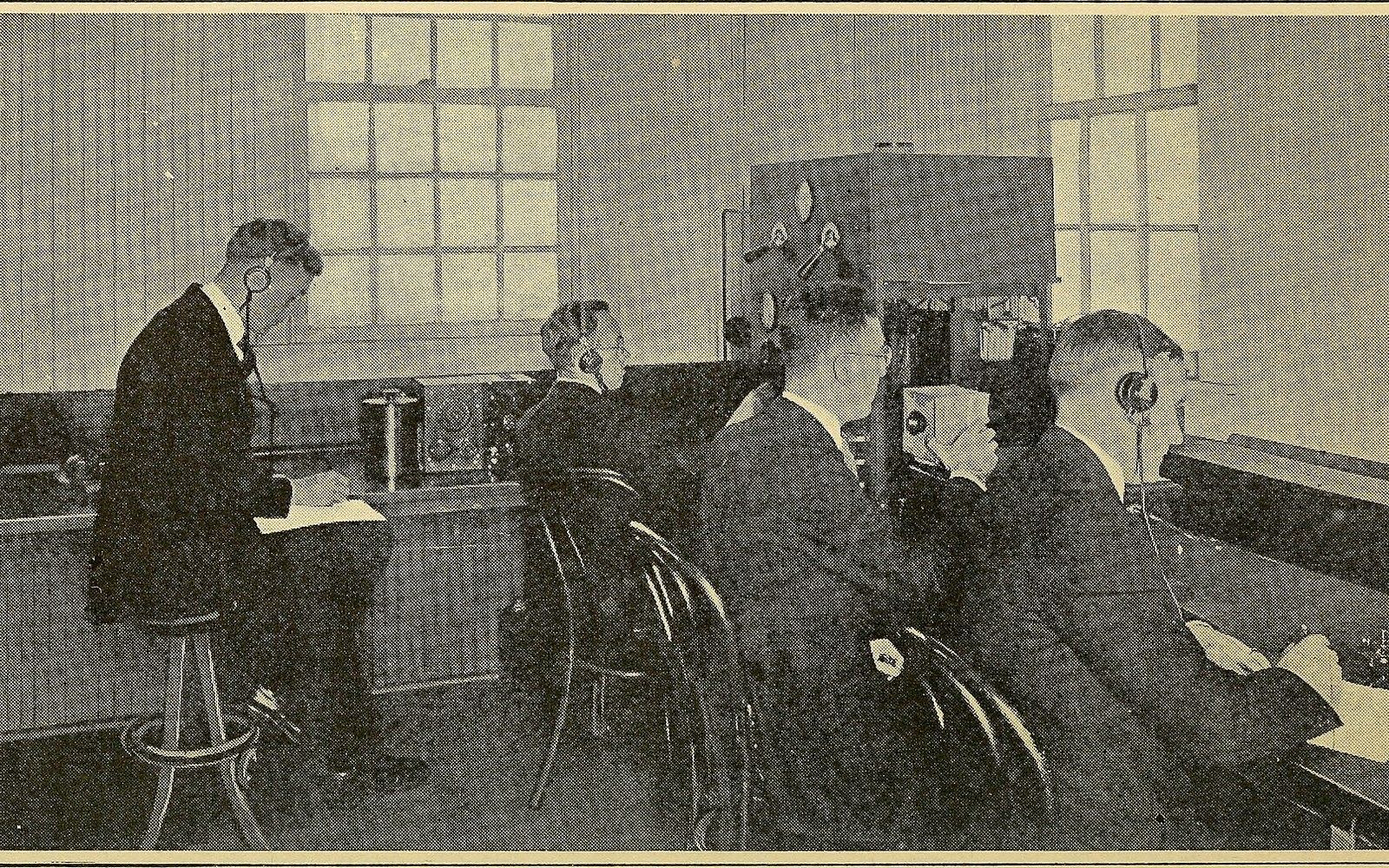
The 1927 Act created a licensing commission; the 1934 Act made it the FCC.
Photo: Radio for everybody; being a popular guide to practical radio-phone reception and transmission and to the dot-and-dash reception and transmission of the radio telegraph, for the layman who wants to · Wikimedia Commons
From Interference to Institution
By 1926, the American radio dial was nearly unusable. Hundreds of stations had crowded onto frequencies without coordination, routinely shifting power levels and wavelengths to drown out competitors. Secretary of Commerce Herbert Hoover had attempted to impose order under the Radio Act of 1912, a law written for ship-to-shore telegraphy that said nothing about broadcasting. When a federal court ruled in 1926 — in United States v. Zenith Radio Corporation — that the Commerce Department lacked statutory authority to enforce frequency assignments, the remaining structure collapsed entirely. Stations moved at will; interference became the norm rather than the exception.
Congress responded with the Radio Act of 1927, signed by President Calvin Coolidge on February 23 of that year. The law established the Federal Radio Commission, a five-member body charged with assigning frequencies, call signs, and hours of operation. It also articulated the foundational principle that would govern broadcast regulation for the rest of the century: the spectrum belongs to the public, and licenses confer use, not ownership. Broadcasters were required to operate in the "public interest, convenience, and necessity" — a phrase borrowed from railroad utility law that has remained in federal broadcast statute ever since.

The web still runs at night in the plants that survived the consolidation.
Photo: Bornil Sarker / Pexels
The Federal Radio Commission was designed as a temporary body, expected to clean up the dial and dissolve. It did not dissolve. Instead, the Communications Act of 1934 absorbed its functions and replaced it with the Federal Communications Commission, a permanent independent agency with authority over telephone and telegraph alongside broadcasting. The FCC has held that consolidated mandate ever since, administering the public-interest standard the 1927 Act first wrote into law.
What the Radio Act did not settle — how expansively the public-interest standard should be read, and how far the commission could dictate content rather than merely allocate spectrum — became the subject of decades of litigation and rule-making. The Prometheus Radio Project would still be pressing versions of those questions in federal court nearly eighty years later. The 1927 Act drew the boundary; every subsequent fight has been about where exactly that boundary runs.