The New York Times v. OpenAI: What the Docket Says
A December 2023 copyright complaint in the Southern District of New York tests whether reproducing journalism to train a large language model is infringement or fair use.
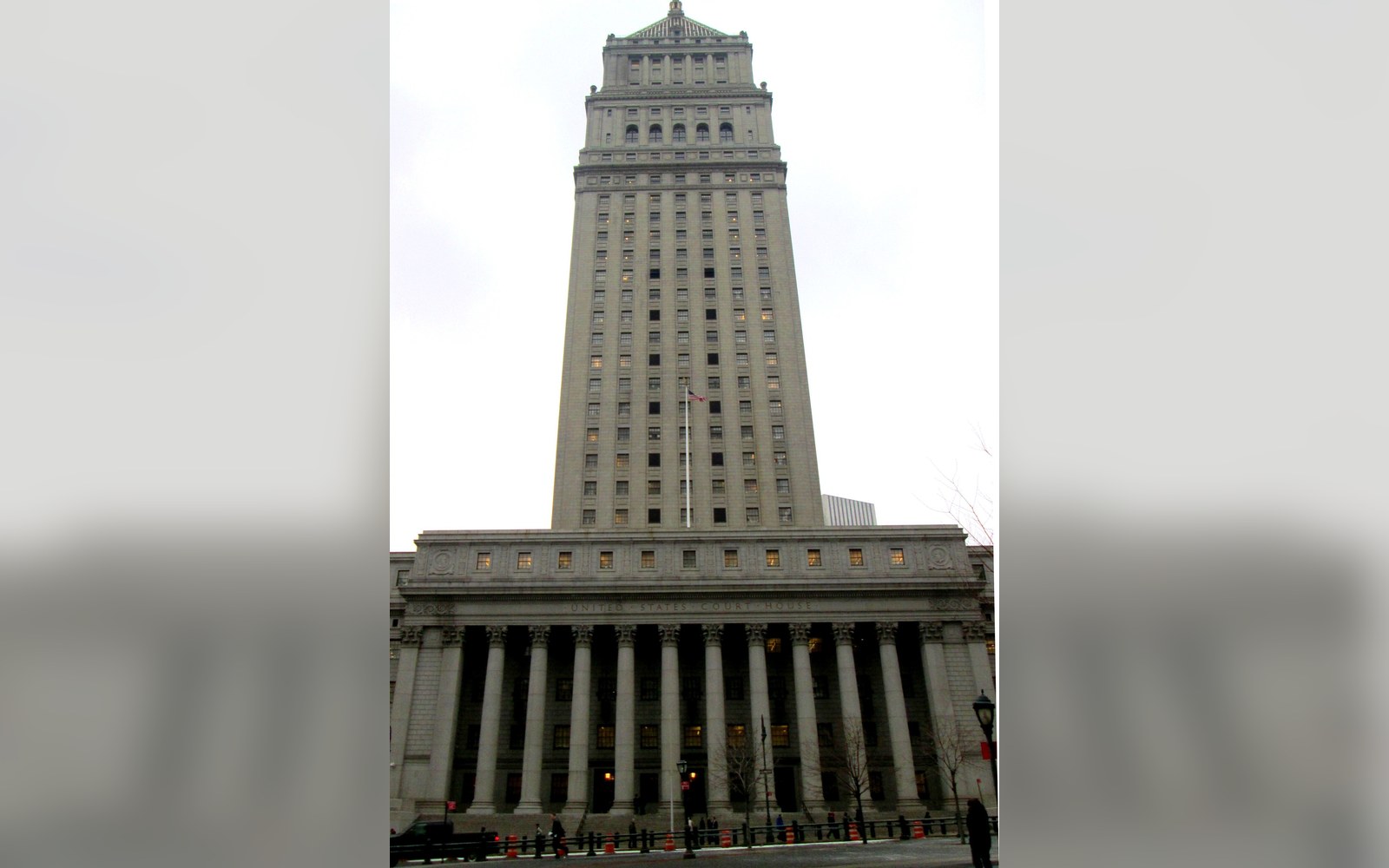
The Southern District of New York, where the Times filed in December 2023.
Photo: Thurgood Marshall United States Courthouse 40 Centre Street · Wikimedia Commons
The Complaint and Its Claims
The New York Times Company filed suit against OpenAI, Inc. and Microsoft Corporation on December 27, 2023, in the United States District Court for the Southern District of New York, assigned docket number 1:23-cv-11195. The complaint runs to 69 pages and rests on six counts, including direct, vicarious and contributory copyright infringement, a DMCA claim, unfair competition by misappropriation, and trademark dilution. The Times named both defendants because Microsoft has invested heavily in OpenAI and integrated its technology into Bing and the Copilot product line.
The core allegation is that OpenAI ingested millions of Times articles — including work behind the paper's paywall — to train the GPT series of large language models, doing so without a license, without payment, and without the paper's consent. The complaint supports this with dozens of exhibit pages reproducing outputs from ChatGPT that closely replicate Times articles near-verbatim, including passages from investigative and feature reporting the paper argues cannot be explained by coincidence or paraphrase. The Times characterised this as direct market substitution, arguing that a reader who can obtain article text from a chatbot has diminished reason to visit NYTimes.com or purchase a subscription.
Nielsen's Gauge would not count this screen at all.
Photo: Jakub Zerdzicki / Pexels
The DMCA claims center on copyright management information — the bylines, datelines, and publication metadata that appear alongside each article. The complaint alleges that when OpenAI's models reproduce article text, they strip or fail to reproduce that metadata, which the statute independently prohibits.
Procedural History Through the Latest Documented Stage
OpenAI and Microsoft filed separate motions to dismiss in early 2024, arguing, among other grounds, that the Times had failed to plead facts sufficient to overcome a fair-use defense and that the DMCA claims were deficient as stated. The motion did not dispute that the training data contained Times content; it argued instead that transformative use — converting prose into statistical representations of language — cannot constitute the kind of copying the Copyright Act was designed to reach.
Judge Sidney H. Stein, to whom the case is assigned, denied the motion to dismiss on the copyright infringement counts in an April 2025 ruling documented in the docket, allowing the principal claims to proceed. The DMCA counts were narrowed but not eliminated. Discovery opened in the autumn of 2024, and both parties subsequently filed motions regarding the scope of discovery, particularly over OpenAI's training datasets, which the company argued contain proprietary architecture details warranting protective orders.

The archive lives here too now.
Photo: panumas nikhomkhai / Pexels
The case does not stand alone on the docket. A consolidated proceeding brought by a group of authors against OpenAI runs on a parallel track in the same district, and the Times complaint is widely cited in those filings as the most extensively documented example of alleged verbatim reproduction. The Authors Guild and several individual writers had already brought separate infringement actions in the same court. The factual record the Times assembled — particularly the exhibits showing near-identical output — appears repeatedly in subsequent complaints by other publishers.
What the Docket Does Not Show
Neither the complaint nor any subsequent filing discloses any settlement discussion. The parties have not stipulated to any agreed facts, and no trial date has been set as of the most recently available docket entries. The Times has not publicly put a damages figure on its claims; the complaint requests actual damages, statutory damages, and disgorgement of profits, leaving quantum to be determined through litigation or resolution.
What the docket does establish clearly is that the Times rejected the licensing path that other major publishers accepted. News Corp, Axel Springer, and the Associated Press each reached commercial agreements with OpenAI in 2023 and 2024, exchanging archival content access for fees that were not publicly disclosed in full. The Times instead moved to litigation, and its complaint's exhibit appendix — the reproduced outputs — became the most detailed public evidentiary record available of how a large language model can reconstruct source text with high fidelity. Whether that record is sufficient to defeat a fair-use defense is the question the Southern District of New York is now working through.